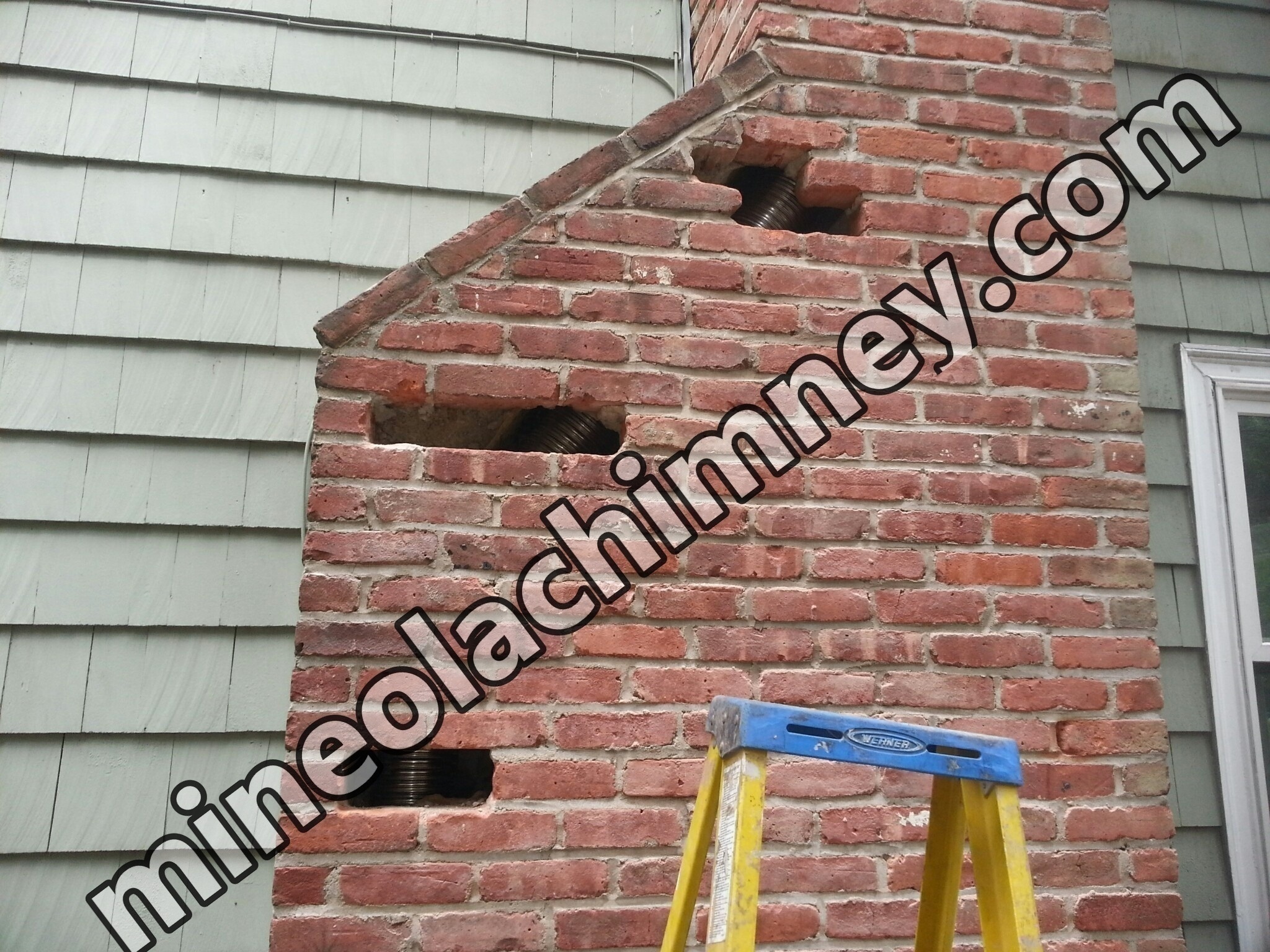



Chimneys are often overlooked until something goes visibly wrong. A small crack in mortar joints, some missing brick, or water stains inside your fireplace rarely feel urgent. Yet these early warning signs matter far more than most homeowners on Long Island realize. What starts as minor deterioration can spread quickly, especially in the freeze-thaw cycles Mineola experiences each winter. DME Maintenance has served Mineola and Nassau County homeowners since 2001, and we've seen countless situations where a simple repair done early would have prevented thousands in damage later.
Mortar joints are the unsung heroes holding your chimney together. These joints between bricks are designed to be softer and more porous than the brick itself. They absorb moisture and weather the worst of the elements so the brick doesn't have to. In Mineola, where homes range from mid-century colonials to older wood-frame houses, many chimneys are decades old. The mortar in these structures eventually breaks down from salt exposure, moisture infiltration, and the relentless temperature swings we experience on Long Island. When mortar deteriorates, water begins finding its way into your chimney structure, the flashing, and eventually into your home's interior walls.
Brick damage in Mineola chimneys typically falls into a few categories. Spalling occurs when the outer layer of brick breaks away or flakes off, usually from water freezing inside the porous material. Cracking appears as clean breaks through individual bricks or running between mortar lines. Both problems accelerate dramatically once they've started. Moisture gets into cracks, freezes in winter, expands, and creates larger damage. On Long Island, where we move from cold winters to humid springs and summers, this cycle repeats year after year. A brick that looks slightly damaged in October can be severely compromised by March if left untreated.
Water intrusion is perhaps the most damaging problem we address in Mineola chimneys. Water can enter through deteriorated mortar, damaged flashing where the chimney meets the roof, cracks in the brick, or a compromised chimney crown. Once inside, it migrates downward into the structure, into the surrounding walls, and into your home's interior. This causes staining on ceilings and walls, promotes mold growth, weakens wood framing around the chimney, and can damage drywall and insulation. Mineola homeowners often notice these problems during heavy rain or after winter snow melts. By that point, water has likely been entering for months. Addressing water intrusion early prevents these cascading problems from taking hold.
The structural integrity of your chimney depends on all these components working together. Mortar joints hold bricks aligned and bonded. The brick itself provides thermal mass and weather resistance. The crown seals the top of the structure. The flashing creates a waterproof transition to your roof. When any one element fails, stress redistributes across the others. A weakened mortar joint means bricks bear more load. A deteriorating crown forces flashing to work harder. Eventually, the whole system can lean, shift, or crack. In Mineola, where many homes have oil heating systems with fireplaces used seasonally or occasionally, it's easy to assume a chimney is fine. Regular inspection catches problems before they affect structural safety or performance.
Seasonal weather on Long Island presents unique challenges for chimney preservation. Winter brings freezing temperatures and salt spray carried inland from the Atlantic. Spring and fall mean frequent rain and dramatic temperature swings. Summer humidity can mask problems that become apparent when heating systems kick in again. Mineola sits in Nassau County where proximity to coastal weather patterns means chimneys experience more aggressive moisture exposure than some inland areas. A chimney inspected in dry September might show new damage by December. Our experience serving homeowners across Mineola has shown us that year-round vigilance makes the difference between affordable repairs and structural problems.
Professional chimney repair isn't simply about patching visible damage. It's about understanding how your entire chimney system functions and what each problem means for long-term performance. A crack in brick might indicate mortar failure underneath. Water staining might suggest flashing issues at the roof line. Deteriorated joints on one side might reflect a particular exposure pattern or drainage problem affecting the whole structure. When we evaluate chimneys for Mineola residents, we're looking at the complete picture: the age of the structure, exposure patterns, previous repairs, and current condition. This diagnostic approach helps us recommend repairs that address root causes, not just symptoms.
Homeowners in Mineola often ask whether they can monitor their own chimneys or wait until obvious problems appear. Some vigilance is certainly valuable. Watching for water stains, checking visible mortar joints, and noticing brick damage all help. However, many serious problems develop where you can't see them. Deterioration inside flashing isn't visible from the ground. Moisture damage inside mortar joints happens before spalling appears on the surface. Structural shifts are gradual and subtle. Professional inspection catches these hidden problems early, when repairs are simpler and less expensive. We recommend Mineola homeowners have chimneys inspected every two to three years, or annually if a chimney is over forty years old.
DME Maintenance serves every street in Mineola. We have been cleaning chimneys on Long Island long enough to know exactly what local homes need — from older clay-lined flues in pre-war houses to modern stainless steel liner systems in newer construction.
The right time to repair your chimney is now, regardless of season. Many people assume chimney work is a spring or summer task, but Mineola chimneys need attention year-round. Winter damage visible in spring needs fixing before next winter. Fall problems should be addressed before freeze cycles begin. We serve Mineola homeowners through all seasons because chimney problems don't respect the calendar. Water intrusion happens in rain anytime. Structural issues develop regardless of temperature. Delaying repair only allows damage to progress. Every month a mortar joint remains deteriorated, more moisture enters the structure. Every season a cracked brick goes unaddressed, the damage spreads.
If you've noticed any signs of chimney trouble at your Mineola home, contact DME Maintenance today at 516-690-7471. We've served Nassau County since 2001, and we understand the specific challenges Mineola chimneys face. Whether you're seeing water stains, noticing loose mortar, or just want a professional assessment, we're ready to help. Call 516-690-7471 now to schedule an inspection and protect your home from chimney damage.